Sports Physical Therapy in Union Square, New York City
We merge rehabilitation and performance to help you reach all of your fitness goals.
Sports Physical Therapy for all Levels, Union Square NYC
Many people are familiar with how physical therapy works, but not so much with sports physical therapy in NYC. Thus, in response to the question, “How does sports physical therapy work?” Sports physical therapy is a specialized healthcare practice that addresses sports-related musculoskeletal disorders via hands-on treatment, patient education, progressive rehabilitation techniques and sports specific training.
At Perfect Stride Physical Therapy in Union Square, NYC, we specialize in sports physical therapy designed to help athletes and active individuals recover better, stay active during their rehab, reduce the risk for future injuries and move better for the long run. Whether you’re a competitive athlete, a runner, or just starting your fitness journey, our expert therapists deliver one-on-one, evidence-based care tailored to your sport and goals.
Whether you’re a weekend warrior, a pro-level athlete, or recovering from an injury, sports physical therapy for athletes in NYC is designed to restore your functional, occupational, and sports-specific fitness levels regardless of age and ability. At our sports rehab clinic in Union Square, our performance physical therapists focus on:
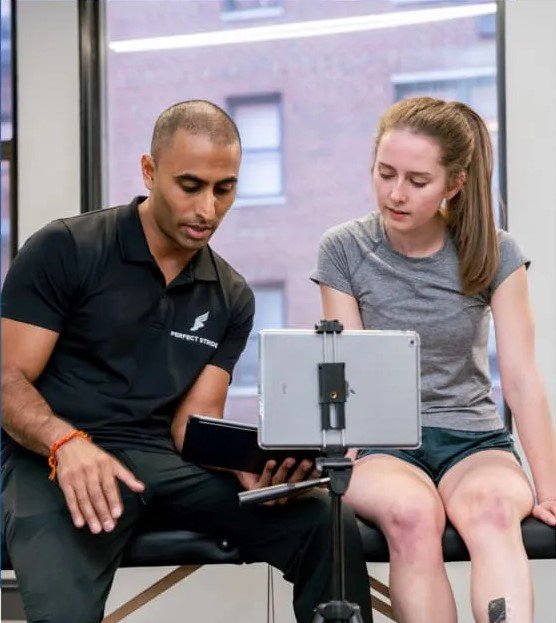
Sports physical therapy often starts with a detailed interview about the athlete followed by a movement analysis aimed at identifying potential risk factors for injury. Our one-on-one treatment philosophy allows us to fully understand the athlete’s story and what other factors may be hindering them from performing at their best. Motion analysis provides data on factors like joint angles, forces, and ground reaction forces, providing a more objective picture than subjective assessments. Motion analysis supports injury prevention by enabling our physical therapists to spot weaknesses or imbalances that could lead to future injuries. Our physical therapists can analyze video recordings, apply clinical movement screenings or use tools that measure force output (dynamometers) to assess the athlete’s baseline and create plans specific to their individual needs and sport to help reduce the risk of injury.
Limitations in movement patterns or mechanical imbalances can place excessive stress on specific joints, muscles, or tendons, increasing risk of injury. For example, analyzing a runner’s stride might reveal excessive foot inward roll with a lack of ability to then outwardly roll the foot to push off (overpronation) which can lead to foot, ankle, knee, hip or back problems. Weaknesses or mobility limitations in specific muscle groups can create imbalances that make certain movements less efficient and more prone to injury
Sports rehab focuses on addressing pain, restoring function, and returning athletes to their sport safely and effectively. The initial phase of rehabilitation following an acute injury may focus on pain management, managing stress of the involved area with the goal to minimize both pain and inflammation and support healing. This generally involves education on better understanding your injury, a detailed plan to help you understand and maintain as high of an activity level as possible without compromising your recovery and strategies to help maximize your recovery.
After the acute phase of rehabilitation the focus moves towards restoring and optimizing range of motion throughout the body with various soft tissue techniques, joint mobilization, other manual therapy techniques and movement. The movement/exercise demands are being increased on the athlete progressively as they demonstrate positive adaptation and improving capacity for movement, allowing for increasing mobility, stability, proprioception (body awareness) and strength. During this phase we also are starting to work on addressing and improving capacity and function throughout the entire body in order to allow for you to return back to optimal function.
The next phase in sports physical therapy is to increase the focus on building strength and power in various movements (local to global movement patterns), and restore functional movement patterns specific to the sport. At this point we gradually increase the difficulty and intensity of exercises that mimic the movements and demands of the athlete’s sport, effectively building strength and stability in the injured area and the entire body.
Exercise drills replicating the movements and demands of the sport with pain-free patterns, allow the athlete to gradually be reintroduced to their sport in a safe and controlled manner. Determining the athlete’s strength, endurance, agility, and sport-specific skills to ensure they are ready to return to competition safely can be measured through various assessment tools such as the Selective Functional Movement Assessment (SFMA). We also stress educating athletes on proper exercise technique, injury prevention strategies, sound training principles and self-management of pain to reduce the likelihood of injury and effective management of any flare ups.
To combat muscle weakness, stiffness, and difficulty performing sport-specific movements after an injury, regaining range of motion, joint movement and flexibility is a critical aspect of sports physical therapy. Our sports physical therapist achieves this via manual therapy techniques and by guiding you through mobility exercises. Gradually increasing the intensity improves flexibility, proprioception (body awareness) and motor control. Techniques like joint mobilization and soft tissue mobilization can help muscles move better and improve joint mobility.
For example, in the case of a golfer, shoulders need both flexibility and stability for the complex movements of a golf swing and mobilization can improve the joint’s overall range of motion. Techniques might involve anterior and posterior glides to improve shoulder flexion (forward lift) and internal rotation (important for the downswing and follow-through). Typically gentle manual techniques and pain-free movements are progressed into active-assisted stretches increasing in intensity and duration as symptoms allow, followed by mobility exercises with a focus on sport-specific movements to restore full functional range of motion.
It’s important to note specific techniques and progressions are tailored to the injured joint, the severity of the injury, and the athlete’s individual needs and tolerance. More severe injuries, like ligament or tears or fractures, will take longer to regain full range of motion than injuries, like muscle strains. Nonetheless regular participation in therapy sessions and following the prescribed home exercise program the sports physical therapist will structure are crucial for optimal results.
Within sports physical therapy, strength & conditioning is used for rehabilitation, injury prevention, and safe return to sport. Training strength and power is vital for an athlete’s overall success, the goal is build up the various tissues resiliency to forces and loads, creating a more resilient athlete. What makes this even more important is that once an athlete is roughly in their third decade of life they start to naturally lose a significant percentage of their strength and power through each decade of the lifespan (power more than strength), thus further reinforcing the need to train strength and power for long term success in sport and life.
Following an injury, regaining strength and power is a core objective in sports physical therapy as muscles and connective tissues provide stability, support joints, and allow for efficient movement. Strong muscles assist in meeting the demands of an athlete’s sport, decreasing the risk of future injuries and robust power enables force generation and explosive movements.
After pain subsides and range of motion improves the goal becomes to build foundational strength in the injured area, surrounding muscles and throughout the body. By gradually increasing the intensity and difficulty of exercises we progressively overload the muscles and stimulate strength gains. As strength improves, weight or resistance is progressed to the exercises along with complexity of multiple muscle groups and functional movements. Thereafter (sometimes simultaneously if allowed) plyometric and other power exercises involving rapid muscle contractions and jumping movements to build power and explosiveness are introduced. An example of a plyometric exercise is a box jump where the athlete jumps up onto a box or platform, landing softly, and stepping back down. Medicine balls can be used for a variety of exercises that train power and coordination along with drills that mimic the powerful movements of the athlete’s sport.
Sports physical therapy doesn’t just focus on healing the injury; it aims to get athletes back to their sport, performing at their peak and is the final, crucial stage that bridges the gap between general physical therapy and a safe, successful return to sport. Sport-specific rehab incorporates exercises and drills that replicate the specific functional movements, demands, and stresses of the athlete’s sport. The program starts with a thorough assessment so they can be started at the appropriate level for their specific needs and gradually increases complexity and intensity to avoid overexertion and setbacks. In the process our physical therapist will identify and address any lingering movement dysfunction in other regions of the body to ensure that the athlete will return to their peak performance. By addressing any remaining movement inefficiencies and strengthening the body for the specific demands of the sport, athletes are less likely to re-injure themselves upon returning to play.
Successfully performing sport-specific demands during rehab boosts an athlete’s confidence to return back to sport at their absolute best.
The Benefits of Sports Physical Therapy - Strength & Conditioning
Strength and conditioning plays a vital role in a sports physical therapy, injury prevention and the physical therapy regimen. Getting muscles, tendons, ligaments and joints stronger makes them better able to withstand the physical stresses of life and sport. Thus building resiliency and higher force tolerance means stressed tissues are less likely to set you back from achieving your performance goals. Also, stronger muscles, improve joint stability and motor control while reducing compensatory techniques..
Targeted strengthening addresses limitations found through assessment, as well as imbalances within a joint or asymmetries from one side to the other. Balanced, strong and well-conditioned muscles support maintaining proper form, are more efficient and prevent one side from being overworked (fatigued) and therefore more prone to injury. Strength training helps maintain a high level of tolerance to loading and stress which allows the athlete to move better and reduce their risk for injury greatly as they are prepared for not only the specific demands of their sport but also whatever life may throw at them.
For the ‘weekend warrior’ New York City athlete, sports injuries are commonly rooted in repetitive stress and taking on too much too quickly (being underprepared), strength training builds the necessary tissue resilience to manage repetitive demands. Through our full body approach we also address deficits found throughout the body to help improve your movement capacity and thus overall performance. Each sport has unique movements, positions, and stresses placed on the body. For example a basketball player’s training tends to focus on jumping, cutting, and acceleration/deceleration, while a swimmer’s training prioritizes shoulder stability and core strength. Customized sport and individual-specific training programs mimic and target the movements, power, or endurance to prepare the body for performance while reducing the risk of injury, ensuring the correct muscles and connective tissues are developed to support those actions, decreasing strain on them during the sport itself.
The physical therapist here at Perfect Stride are well trained to assess movement patterns throughout the body during sport-specific exercises that might lead to injury and provide targeted training to correct those issues. Ramping up training demands too quickly can increase injury risk and our physical therapist starts your training right where you need to be based on your assessment and then work towards bridging the gap to your performance goals as your body adapts and improves its capacity. This allows for the athlete to safely handle the higher forces and reduce the risk of sudden overexertion-based injuries.
What Can One-on-One Physical Therapy Do For You?
A study by the CDC has shown that sports and recreational sports related injuries are on the rise: sprains and strains accounted for the largest portion of injury types, fractures (bone stress injuries) were next, followed by contusion, open wound, traumatic brain injury, and dislocation. How injuries are handled will determine how fast you recover and the likelihood of re-injuring.
Sports injuries are an unavoidable hazard that comes with being active. Whether it’s practicing yoga, running, cross-training or cycling, getting even mildly injured can dampen enjoying the activity you love. When this happens a Physical Therapist can help with your complete recovery and enable you to resume the activity you love.
Many mistakenly think physical therapy is for serious athletes or people recovering from surgery or major injuries, but sports therapy and rehabilitation is indeed a great help for everyone feeling aches or pains. Physical Therapy can provide a tailored exercise and mobility program that can keep your body active and healthy.
Physical Therapy can also be very helpful in repairing injuries like tennis elbow, shin splints, tendinitis, or repetitive strain injuries from working in office environments or playing high repetition sports (running, tennis, swimming).
Schedule a FREE discovery call with one of our Doctors of Physical Therapy to find out how we can help you.
Physical Therapy is helpful to people of all ages facing medical conditions, pain, stiffness or injuries that limit their ability to move and function optimally.
It is important for those recovering from sports injuries, surgery or chronic pain as the benefits of physical therapy can change their lives by reducing pain, maximizing function, increasing range of motion, optimizing athletic performance and more.
What Our Clients Think
“One on one physical therapy sessions which you rarely find. They have very extensive knowledge and provide an hour’s worth of rehab to get you back in the game. I had initially come in for ACL knee surgery recovery which took 6 months and unfortunately many years later hurt myself again from an ice hockey collision and again came back to Perfect Stride to rehab”
(5 Star Google Review)
— Boris D.
What Benefits Can You Get From Physical Therapy?
With the help of a Physical Therapist, you can reduce your recovery time, get back to your activity much quicker, and prevent the chances of similar injuries from occurring in the future. There are numerous benefits which can dramatically speed up your recovery from injury and or pain and help you get back to your previous level of fitness. Some of the benefits you can experience from Physical Therapy for your sports injury include:
- Reduce Risk
- Increase Mobility
- Reduce Pain
- Avoid Surgery
- Less Stress
- Restore Confidence
- Stay Active
Reduce Risk
Physical Therapy does not just help you heal after an injury, but also helps to reduce your risk of injury or reinjury by addressing your mobility, stability, strength deficits and training habits. If you have experienced pain, weakness or stiffness in a joint or had an injury or accident in your past you may be able to avoid problems down the line by visiting a physical therapist now. Physical therapy enables you to be proactive in identifying asymmetries in your body along with risk factors that may predispose you to injury or inhibit your physical performance. By evaluating and addressing these factors, injuries may be prevented.
Increase Mobility
Physical Therapy does not just help you heal after an injury, but also helps to reduce your risk of injury or reinjury by addressing your mobility, stability and strength deficits. If you have experienced pain, weakness or stiffness in a joint or had an injury or accident in your past you may be able to avoid problems down the line by visiting a physical therapist now. Physical therapy enables you to be proactive in identifying asymmetries in your body along with risk factors that may predispose you to injury or inhibit your physical performance. By evaluating and addressing these factors, injuries may be prevented.
Physical Therapy helps restore normal movement by improving joint flexibility, muscle length, and overall range of motion. Through hands-on techniques, guided stretching, and targeted exercises, physical therapists address stiffness, tightness, and movement restrictions caused by injury, surgery, or overuse. Improved mobility allows you to move more freely, perform daily activities with ease, and return to sports or exercise with better control and confidence.
Reduce Pain
Physical Therapy can help you find relief from pain, manage pain or heal following an injury or illness. By progressively building up movement, exercise and educating you about pain, Physical Therapy can serve a role in retraining the brain away from pain. This process involves the brain being taught with each movement (performed in a calculated and progressive fashion to prevent causing a flare up). Pain signals can subside and even be eliminated in response to therapist guided treatment.
Avoid Surgery
Physical Therapists are experts in assessing a multitude of body systems, including the musculoskeletal and neurological systems and depending on the situation, may enable you to avoid undergoing surgery. For example, something called lumbar spinal stenosis is a type of lower back pain that is sometimes treated with surgery. However, Physical Therapy works just as effectively in resolving the pain, and comes with fewer unwanted complications, some of them life-threatening, than surgery, according to a study published in the Annals of Internal Medicine.
Less Stress
Stress related headaches develop due to a combination of hormonal surges and physical tension in the body, often the neck and shoulders, all which can be alleviated with a targeted treatment approach tailored to your situation. Also, changing our breathing patterns can help promote “rest and digest” aspects of our nervous system, and lessen the “fight or flight” response. This will help decrease overall stress in the body as well. Tension headaches are debilitating, and physical therapy can help you overcome that pain.
Restore Confidence
Physical Therapy does not just help you heal after an injury but also reduces your risk of injury or reinjury by addressing your mobility, stability, and strength deficits. In many instances working with a physical therapist who can confidently prescribe movement and let the athlete know what they can and can not do, will help to greatly restore confidence by giving the athlete a pathway to moving more. Education is the single most important intervention that can be provided, it allows for better training habits, the ability to manage flare ups as they may arise and building the confidence to return to sport.
Stay Active
It’s been well established that pain medications are highly addictive and commonly overused. If you are trying to reduce any pain medication use or avoid the use of pain medications altogether, Physical Therapy can help. Our therapists can help understand what is causing your pain, what pain might be alright to work with and in a collaborative manner with you provide a customized treatment plan that will get you moving and feeling better. We utilize a wide range of assessment tools, manual therapy techniques, education and exercises to enhance your quality of life and in many cases eliminate the need for opioid medication.
Do you need help with movement?
At Perfect Stride we work with clients on an individual level, allowing you to be an active team member in your treatment and health.
What is Personalized Physical Therapy?

A one-on-one session with your Doctor of Physical Therapy.

A Physical Therapist who has time to listen, assess, re-assess and treat you through manual/hands-on techniques, education about your condition, and movement-based treatment.

Time spent discussing your short & long-term goals and how we are going to crush them.

A plan of care that is centered around your schedule and needs.

A home training program with customized and highly effective exercises tailored to your assessment, goals, and lifestyle.
If you want to know how Perfect Stride can best help you, we offer FREE 15 minute discovery calls with a Doctor of Physical Therapy.
Your Physical Therapy experience will be tailored to facilitate an efficient and healthy recovery.
Every patient’s treatment plan is structured and designed based on the root cause of their problem; there is no one-size-fits-all approach. Our therapists hold numerous advanced certifications and are industry leaders who have been reshaping how Physical Therapy is provided. Treatment at Perfect Stride is always unique to the individual, click on the topic below to learn more.

MANUAL THERAPY TECHNIQUES
- Functional Range Release
- The Maitland Manual Therapy Approach
- Active Release Technique
- Instrument Assisted Soft Tissue Mobilization
- Joint Mobilization

THERAPEUTIC EXERCISE
- Functional Range Conditioning
- The Functional Movement Screen
- The Stick Mobility System
- Kinesio Taping
- Blood Flow Restriction (BFR)

MOVEMENT SCREENS/ANALYSIS
- The Functional Movement Screen
- Titleist Performance Institute
- The Selective Functional Movement Assessment
- DorsaVi Motion Analysis